
#20/25: What I know about love and signal processing
Memories, digitizing analog signals, and why data won't save me

It was an extremely normal work day, which is what made its commute so beautiful.
I unfolded slowly into the sunrise. I finished my coffee, triaged my emails, and curled my eyelashes before hopping on the bus to work.
People smiled during the status update meeting. I caught up with a friend over lunch. Back-to-back meetings cascaded through the afternoon and generated a backlog of docs to write and emails to send. My thoughts about dinner landed on “whatever I have”. I walked back to the bus.
On the road home, I put my earbuds in and listened to Black and White by Niall Horan. The sun prepared to set and the bus was all warm orange. The grass was tuftier than usual for no apparent reason. It needed no reason.
The bus could’ve been an art gallery. People would board and look out the windows and say wow, what beauty captured here. Look at the life. Look at the feeling.

I knew I would miss this moment. I knew that someday, and that day was today, I would miss all of my work commutes. I would miss every square inch the light fell on, every bump on the road, every detail from the pocket I put my earbud case in to what everyone on the bus was wearing.
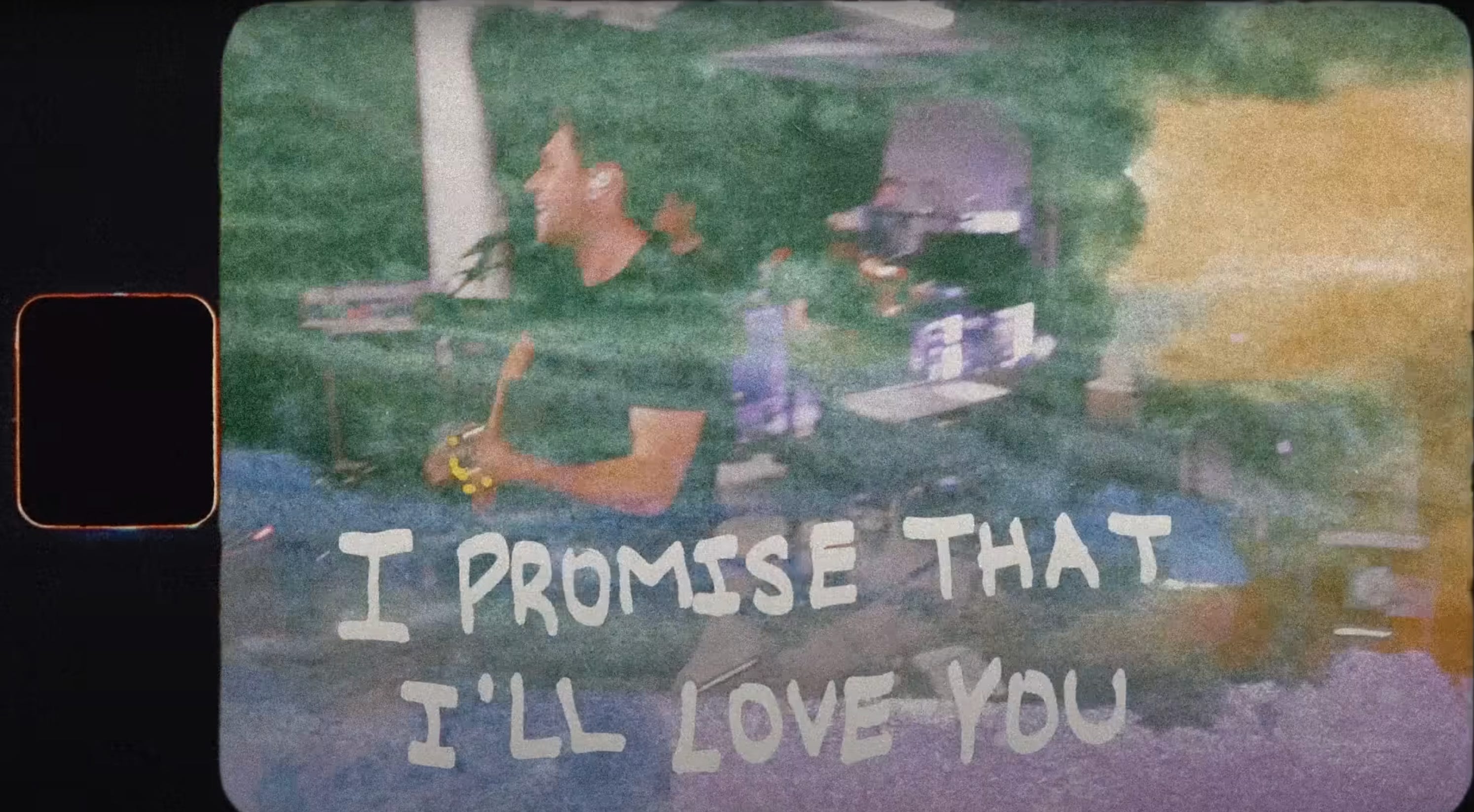
The drive passed by as I played Black and White on repeat. This song is definitely about marriage. There’ll never be another. I promise that I’ll love you for the rest of my life.
Or is this song actually about a work commute?
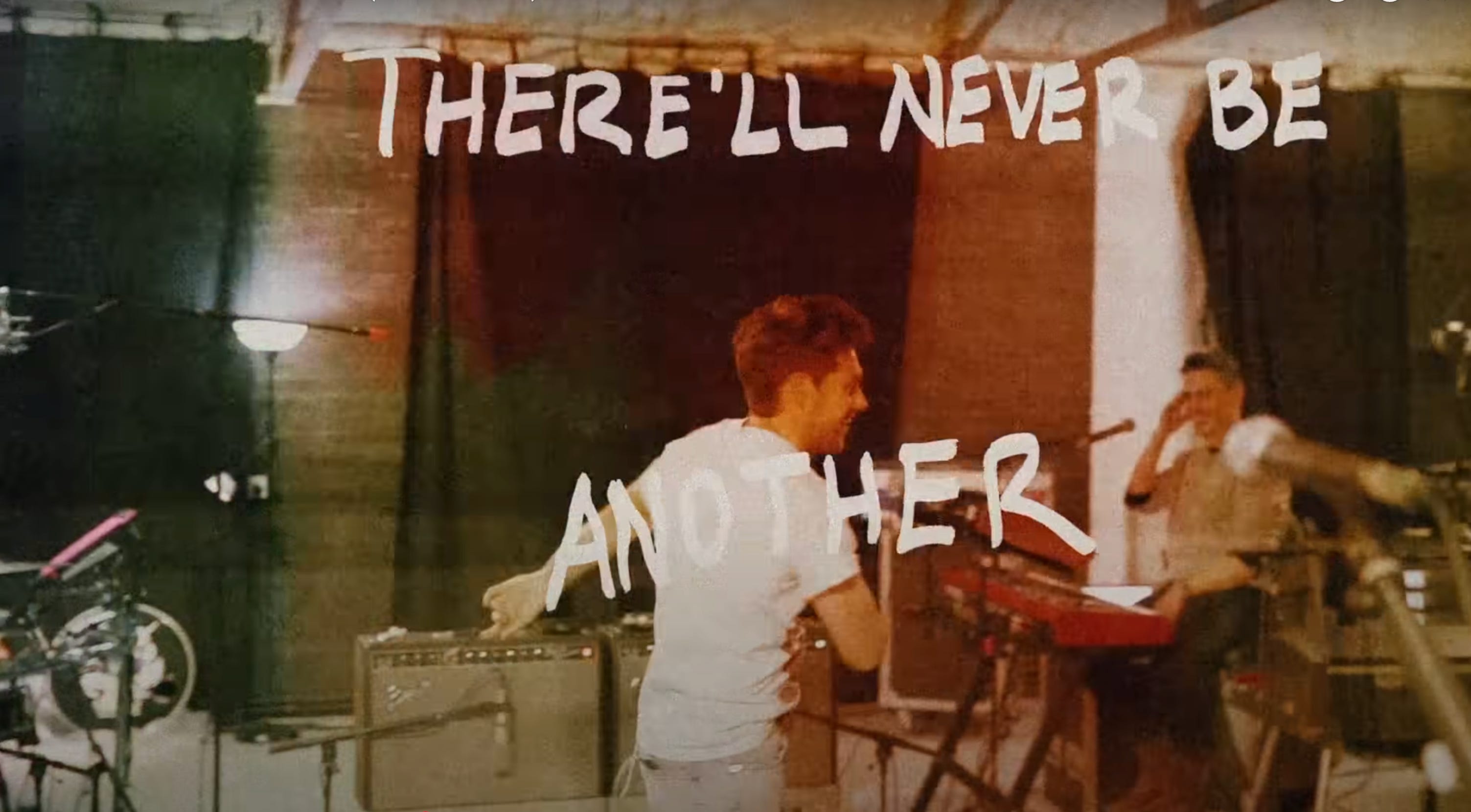
You good? I asked myself as I stared out the bus window teary-eyed, obviously not good. No way I was crying over my work commute. No way I was this devastated about not remembering every second of my every commute. If you told me you recorded every second of my every commute and that you’d stream it back to me in real time, I would scream, actually. Yet I knew in the future I’d remember this: I commuted to work and it was beautiful. All the detail would collapse into one nebulous, fuzzy memory that I’d cling onto forever, and I already dreaded all the info loss. There’ll never be another. I promise that I’ll love you for the rest of my life.
Digitizing and reconstructing an analog signal
This randomly poignant bus ride home from work wasn’t my first time getting emotional about info loss.
Years ago, I became especially sad in one particular signals and systems lecture. We were converting a continuous, analog signal into a discrete, digital form. These are fancy words to say you measure something a bunch and then use those measurements to reconstruct the original source.
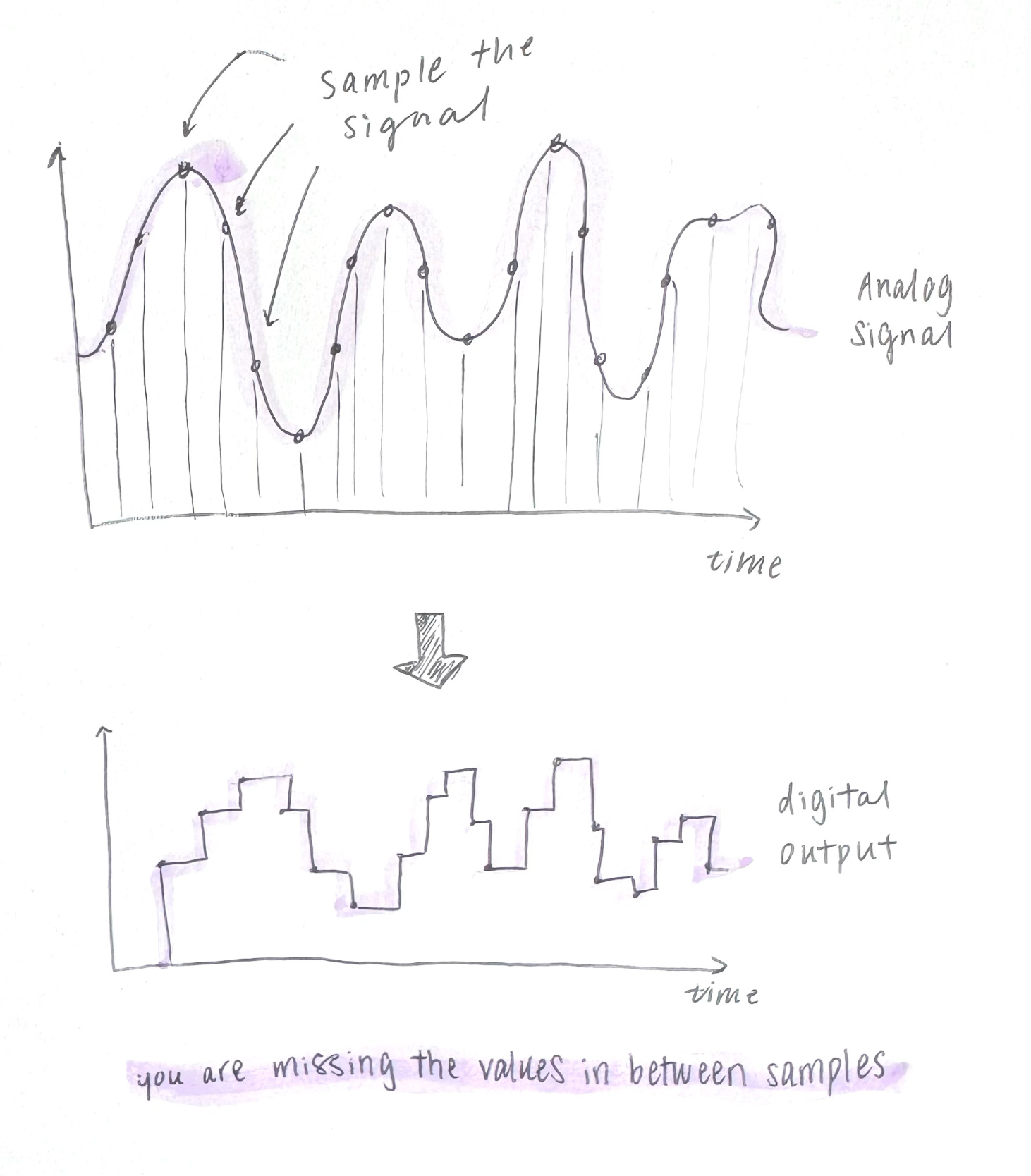
You take a continuous signal, say, the outside air temperature. You measure it at optimal intervals, like every hour instead of every millisecond, plot those points, and then join them together to approximate the original signal. This makes the signal easier to store, transmit, and work with, at the cost of losing the detail between measurements.
I wondered how the signal felt about having its detail dropped like that, its richness lost in translation. Naturally, I then made it about myself, my continuous, analog self, lamenting all the info loss between my captured memories. Analog signal, I feel for you and everything you’ve lost to time. I’m sorry for your data loss. I’m sorry we’ll never know the whole you, that you are the sole witness to your entirety. I’m sorry, what are we covering in lecture right now?
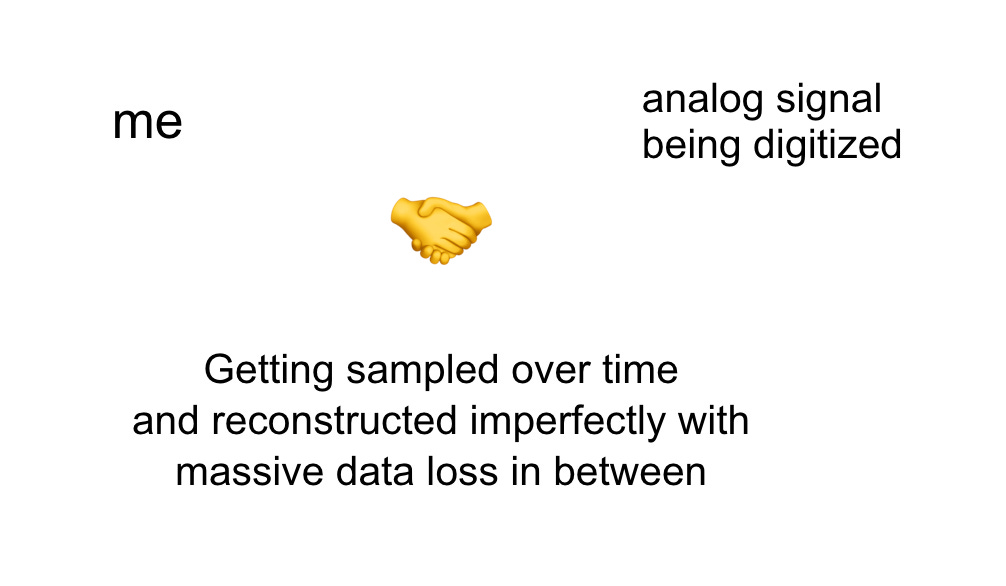
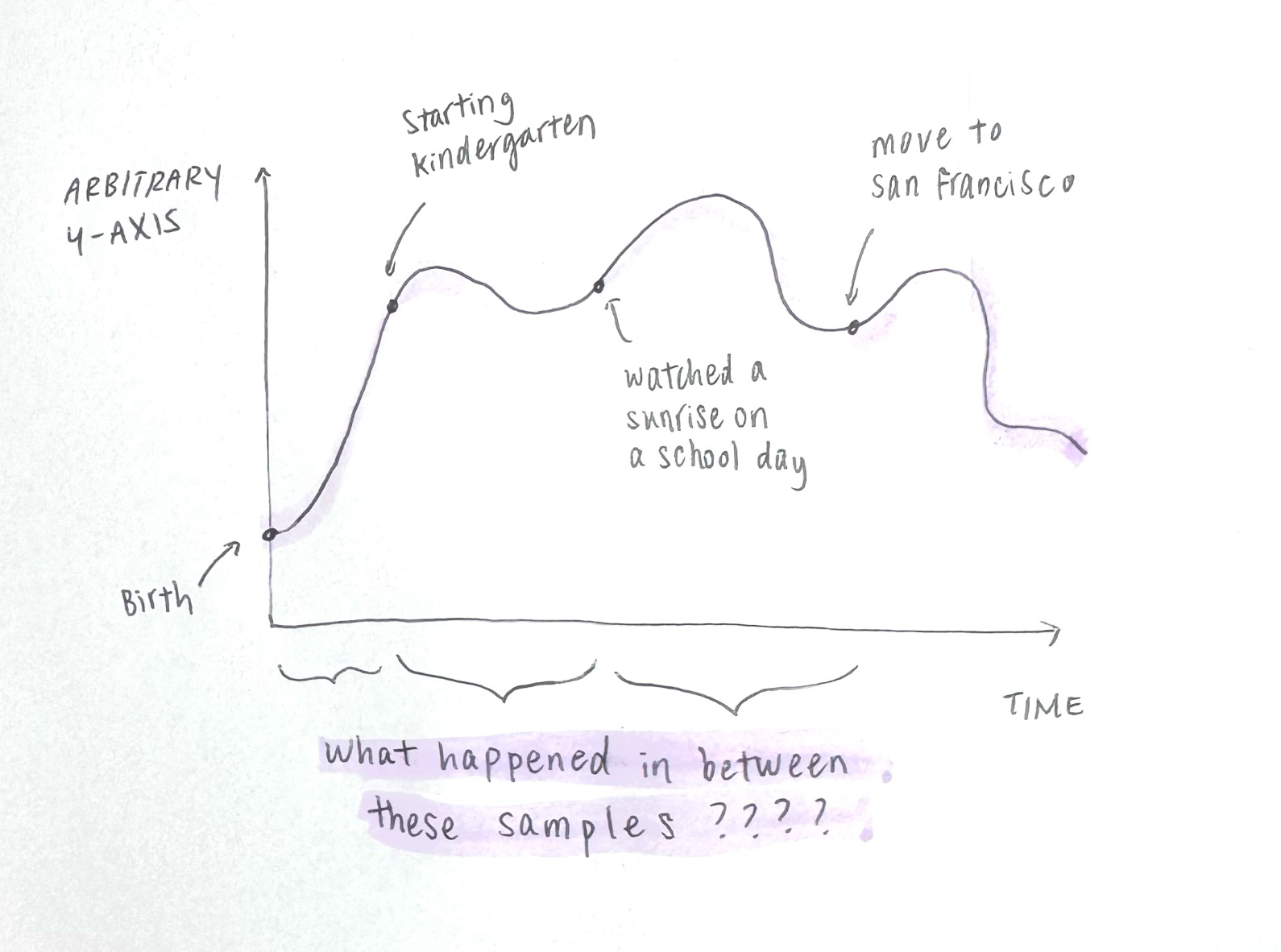
There I was in lecture, sad about losing moments to time. Years later, there I was again, now on a randomly poignant bus ride home from work, still sad about losing the moment forever. I can’t seem to shake off this sadness about time.
But could I?
More sampling will not save me
If the problem is “I am sad about losing moments to time”, one potential response is to minimize the loss, and therefore the sadness, by remembering as many moments as possible.
I don’t think documenting everything will save me. This is too bad because documenting everything is easier than ever, with consumer technology continually promising more data acquisition, more storage, no detail left behind. With every action captured, organized, and AI-summarized, you may never have to forget anything ever again. But still: this is recall. The original moment is gone, never to be experienced again, and that’s what I’m sad about.
Reconstruction won’t save me either
Could my sadness be solved, then, if I could experience all those past moments again?
I don’t think that’s what I’m looking for either (I am kindly asking you to not make me relive every second of my every commute in real time). This is good for me to have a stance on because the consumer tech offerings don’t stop at documentation. Soon, beyond documenting everything, you may be able to recreate anything. World models are now able to take in text prompts to create worlds you can navigate in real time. Perhaps one day I could reconstruct my Randomly Poignant Bus Ride Home perfectly, down to every last grass tuft, and live in it forever. This future concerns me. Now my imagination needs to worry about unemployment too?
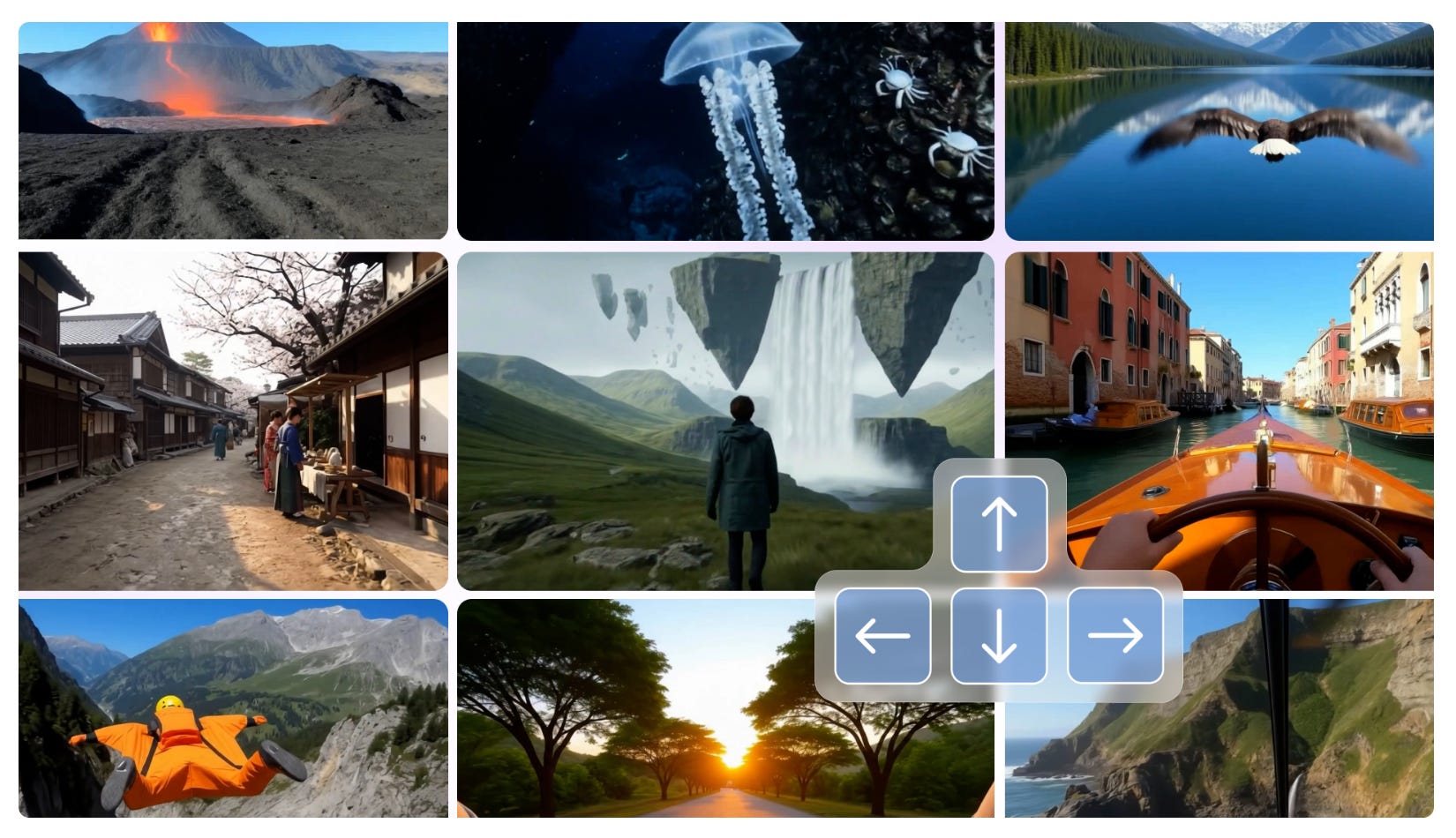
It’s not that I don’t get the appeal of digitally recreating people, places, and things I love. I very much get the appeal. That’s the problem!! I would love to relive my highlight reel. And I do, spacing out and landing in my head over and over again (my imagination is still employed for the time being). I could stay there forever, me and my memories. Yet there is this alarming truth I keep returning to: my time on earth is finite, and this finite resource will run out, and I can spend it replaying my life on loop or I can generate new footage. I can stay or I can go. There is time for both, I think, in moderation.
Is the only solution to be present in the moment?
So I can’t document, remember, or relive my way out of the passage of time. Perhaps all I really have is the present moment.
Even if I’m as present as humanly possible, though, won’t the moment still pass? I’ll still be sad it’s gone. So maybe if I could document and remember the moment better…relive the moment…?
I have come full circle now and still have not found a way to stop losing moments to time.
The sadness is a signal
I seem to hope I can solve my way out of the passage of time. If I remember enough, stay present enough, if I work hard enough, I can make time stay. I obviously can’t!!1
The truth is simpler and harder: the moments will always slip away. They are unrepeatable, unmeasurable, impossible to fully capture or hold onto. There’ll never be another. And you know what? Feeling sad about beautiful moments ending is…probably normal. It feels like love, really. And so it feels like the sadness is a signal itself, and it points to what I’m being called to love. And why would I not tune into love? I return to my own past writing about this:
What is the point of all this if nothing lasts forever? I’m setting myself up for heartbreak. But why would I avoid love? Given the choice, I’d pick the heartbreak over and over again.

Of course, sometimes I tune too much into the sadness. I could stay there forever, me and my memories, me and my rumination. But my time is finite, and I know I can stay or I can go, and I want to find time for both. As much as I can’t shake off the sadness, I also can’t shake off the urge to keep going. It comes down to trusting myself to hold both truths at once.
I know sadness, I know love, and yet I have so much more to learn about both. So much more! How lucky I am for that. So this is my hope for myself: to remember what I can and to stay in the moment for the rest. And when the sadness hits, to trust that letting myself feel it makes room to love fully. To know that the moments slip away but the love doesn’t.
There’ll never be another. I promise that I’ll love you for the rest of my life.
💌 this is piece #20 in “if only i had a fourier transform for this feeling”, a series of reflections on what i learned while studying engineering physics in university. thank you for following along <3
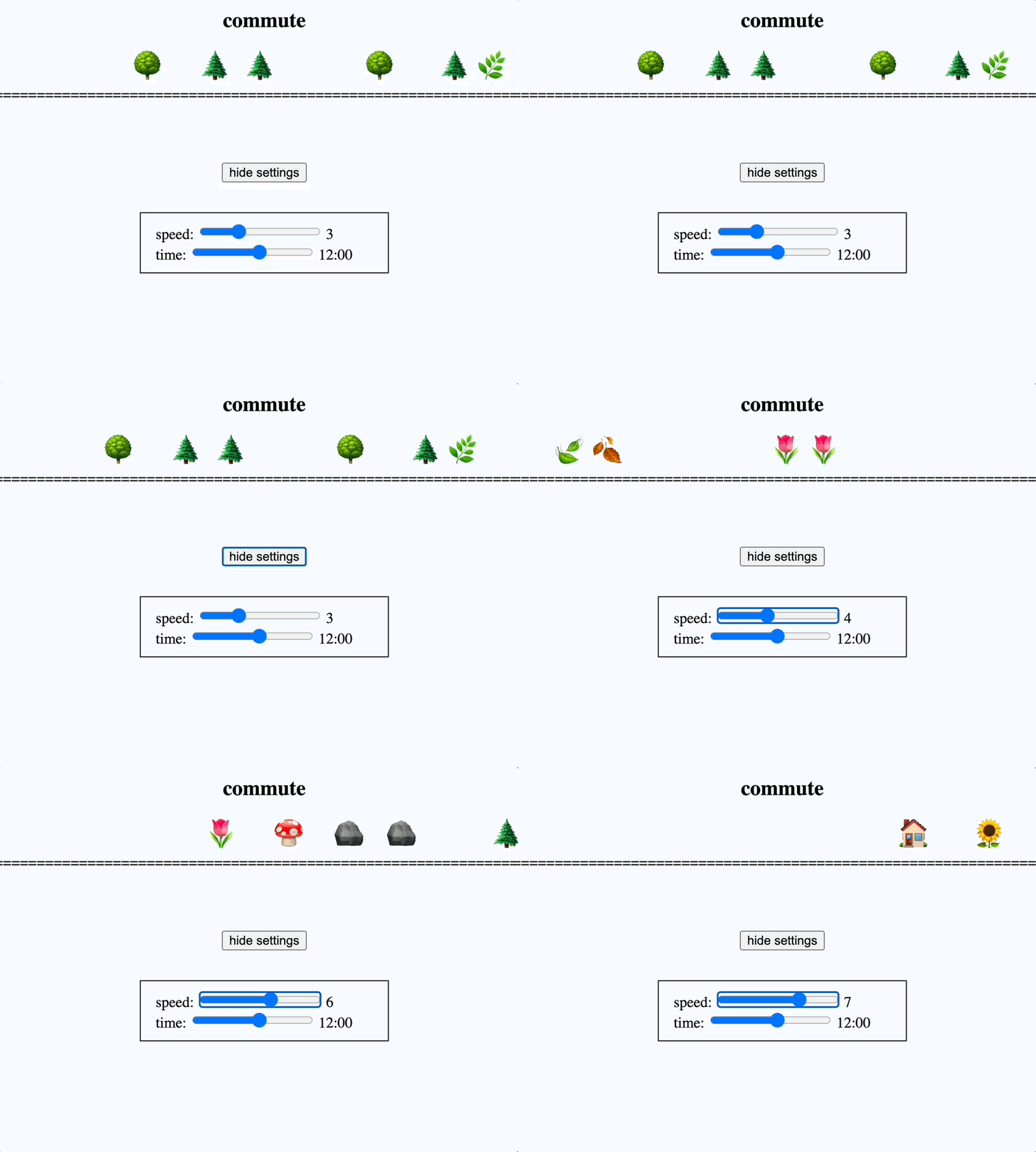
. ݁₊ ⊹ . ݁˖ . ݁. ݁₊ ⊹ . ݁˖ . ݁ other commute thoughts ~ i enjoy musing about being On your way! e.g. my commute and catch your bus simulators <3 thank you for sharing this online space with me!!! . ݁₊ ⊹ . ݁˖ . ݁. ݁₊ ⊹ . ݁˖ . ݁
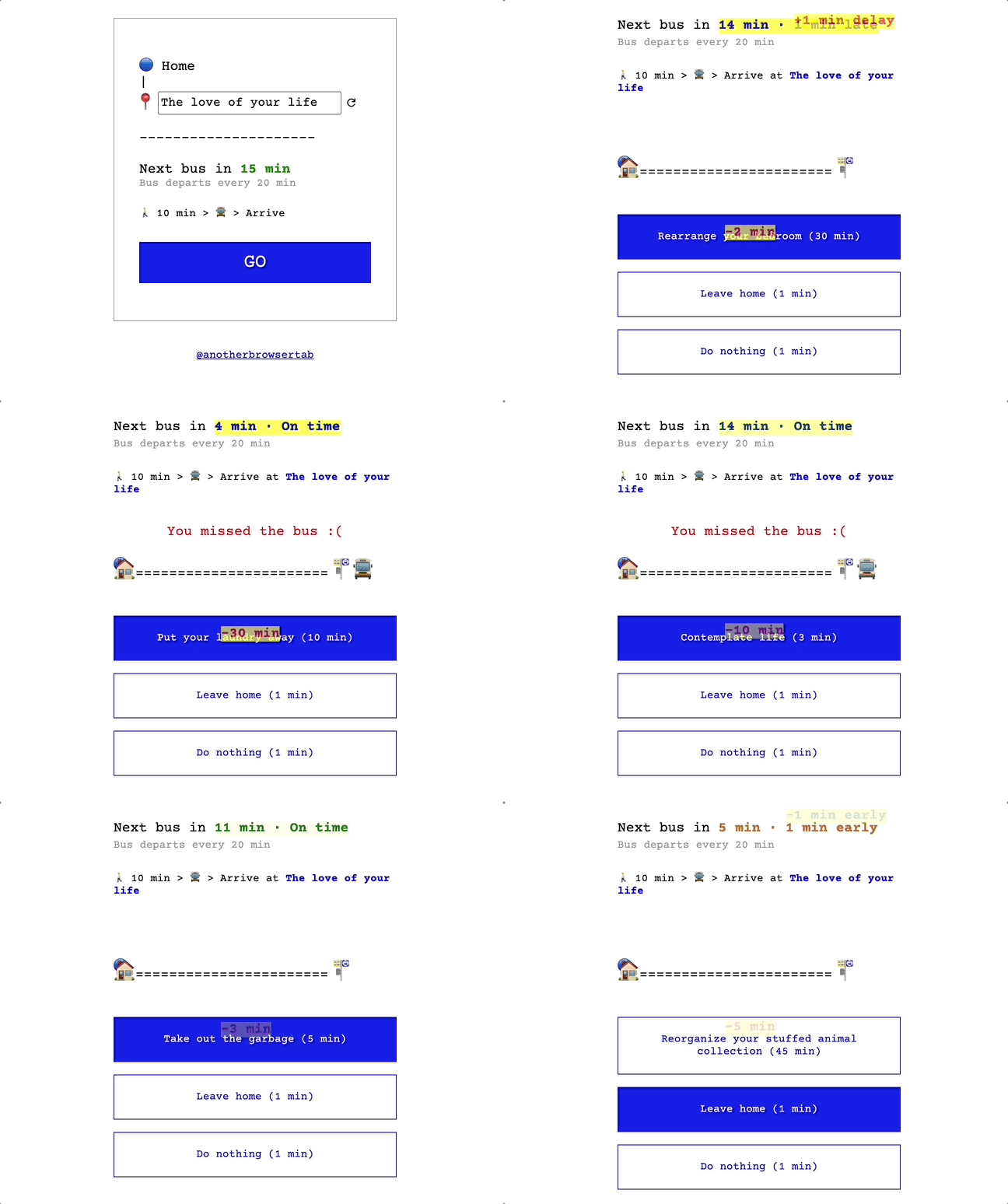
Einstein’s theory of special relativity says that time is not absolute. Time dilation refers to how time passes at different rates, relative to stationary observers, depending on how fast you’re moving. If you could travel at the speed of light, which you could do if you were massless, time would stop passing for you (!). This is supposedly impossible because the faster you go, the more your mass increases. In fact, because your mass approaches infinity as you approach the speed of light, you end up needing infinite energy to move at the speed of light. This is all to say: if I could run faster—like 671 million miles per hour fast—and solve the energy and mass issues that emerge at such speeds, maybe I really could stop time. I really do not like speed work though :(
<3 <3 <3
time to travel from my home to the love of my life and only see trees along the way